


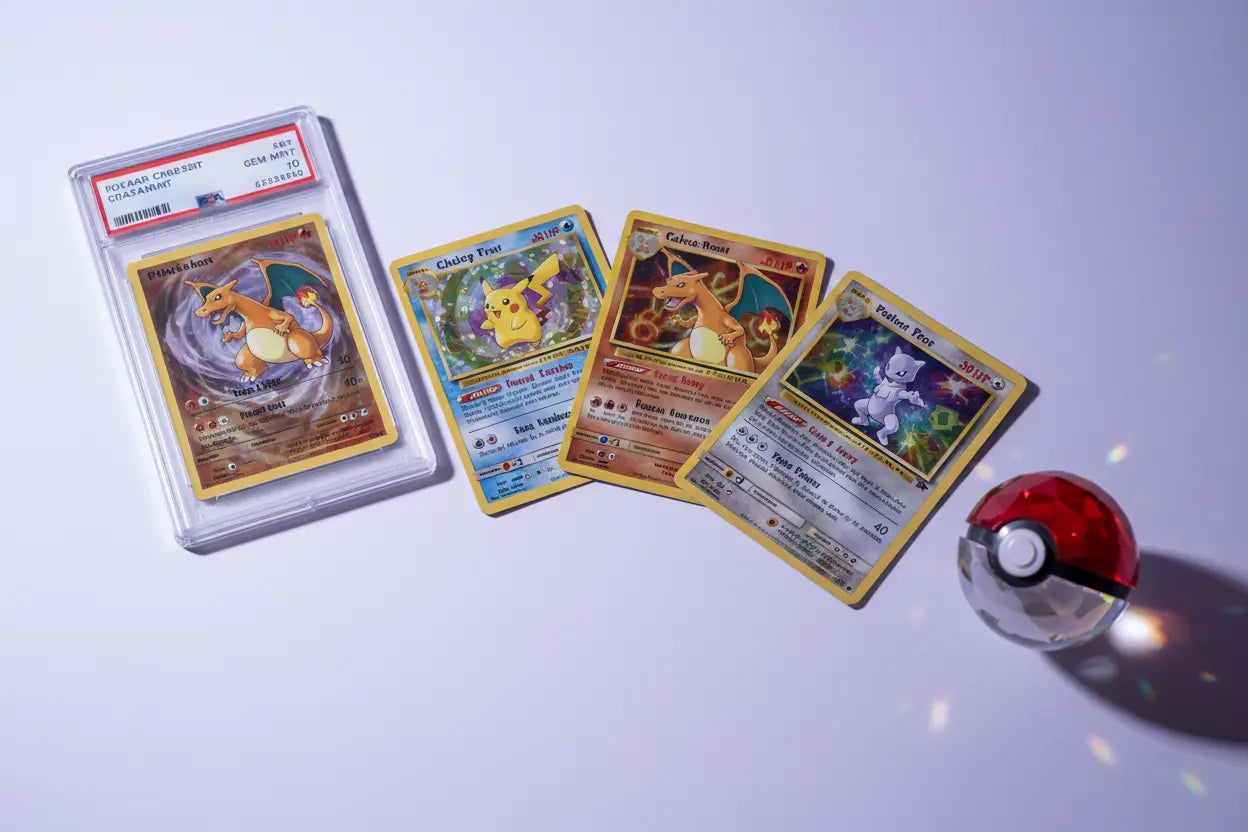
The quest for rare Pokémon cards fascinates seasoned collectors and budding enthusiasts alike. Understanding what gives a card its rarity and value is essential when considering investing in this world. This guide offers precise insights into recognizing these treasures, learning how to assess their value, and grasping the subtleties that make all the difference in the 2026 market.
What makes a Pokémon card rare?
A Pokémon card's rarity stems from several factors that determine its attractiveness to collectors. It can result from limited print runs, such as first editions or special editions, and sometimes from printing errors that create unique variants. The condition of preservation plays a crucial role: a impeccably preserved card will always be more sought after than a worn card. Finally, rarity is divided into four categories: common, uncommon, rare, and ultra rare, with each level having an increasing degree of exclusivity.
The different types of rare Pokémon cards
Among rare cards, Ultra Rare and Holographic cards hold a special place, often recognizable by their brilliance and special finishes. Promo Cards, distributed at events or competitions, possess a particular rarity. In addition, there are examples such as "Gold Star" cards, famous for their golden design, or "Pokémon EX" cards, which offer enhanced in-game powers. Finally, cards from tournaments or limited editions, often with specific markings like a star or special numbering, are the most sought after on the market.
Famous examples of rare Pokémon cards and their value
Some cards have gained worldwide renown, notably the first edition Charizard, whose value can range between 10,000 and 150,000 euros depending on its condition. Even more exceptional, the Pokémon Illustrator card is a unique item valued at several million euros. These astronomical values are explained by their extreme rarity, their history, and very high demand. Recently, several auctions have broken records, further increasing the financial and symbolic interest surrounding these legendary cards.
How to assess the rarity and value of a Pokémon card?
Card assessment often involves professional grading by PSA, Beckett, or PCA experts, who assign an objective score based on the physical and aesthetic condition. It is crucial to verify the provenance, edition, and precise details of the card, such as its version and year of issue. To estimate real-time value, several online platforms allow for market price comparison, while symbols and numbers inscribed on the card provide reliable clues that should not be overlooked.
Influence of editions and expansions on the rarity of Pokémon cards
First editions, released in the 90s, are historically the most prized for their age and small print runs. Expansions like XY, Diamond & Pearl, or Black & White each have their share of rare cards that appeal to collectors. Limited or event series accentuate this rarity. The progressive increase in the number of cards produced also influences the collection dynamic, making certain sets more difficult to complete.
Why are collectors interested in rare Pokémon cards?
At the intersection of nostalgia and passion for the game, many collectors see these cards as a real financial and sentimental investment. The symbolic value of a rare object adds to the economic appeal in the secondary market. The energy of the global community and international auctions contribute to driving up prices, reinforcing interest around these unique pieces.
Tips for starting a collection of rare Pokémon cards
Before buying, it is essential to learn about rarity indicators and recognize editions. It will be necessary to favor reliable sellers and prioritize cards in excellent condition to secure your investment. Protecting your cards with appropriate sleeves and binders ensures their preservation. Finally, maintaining a classification system helps to accurately track the rarity and value of each card over time.
How to compare the value of different rare Pokémon cards?
Comparing value involves considering the year, card condition, official grading, rarity, and current demand. Analyzing auctions and specialized platforms offers a more concrete view of trends. Prices can fluctuate based on the Pokémon's popularity or current trends, but the relative rarity between similar cards remains a primordial criterion to keep in mind.
Common mistakes to avoid when buying or selling Pokémon cards
The world of Pokémon cards is not exempt from counterfeits that are frequently found on the market. Meticulous verification of provenance and professional certification are essential to avoid unpleasant surprises. One must also be wary of descriptions that exaggerate the condition of the cards. Finally, the costs associated with certification and commissions on sales reduce the final net value and must be taken into account.
Recognized platforms and organizations for certification and sale
Organizations such as PSA, Beckett, and PCA guarantee official grading recognized both in France and internationally. For sales, specialized websites and auction platforms offer a secure and transparent market. These services increase the confidence of buyers and sellers, thus facilitating transactions. The choice of platform will depend on the objective: personal collection or profitable resale, each case requiring an adapted approach.







Leave a comment
This site is protected by hCaptcha and the hCaptcha Privacy Policy and Terms of Service apply.