
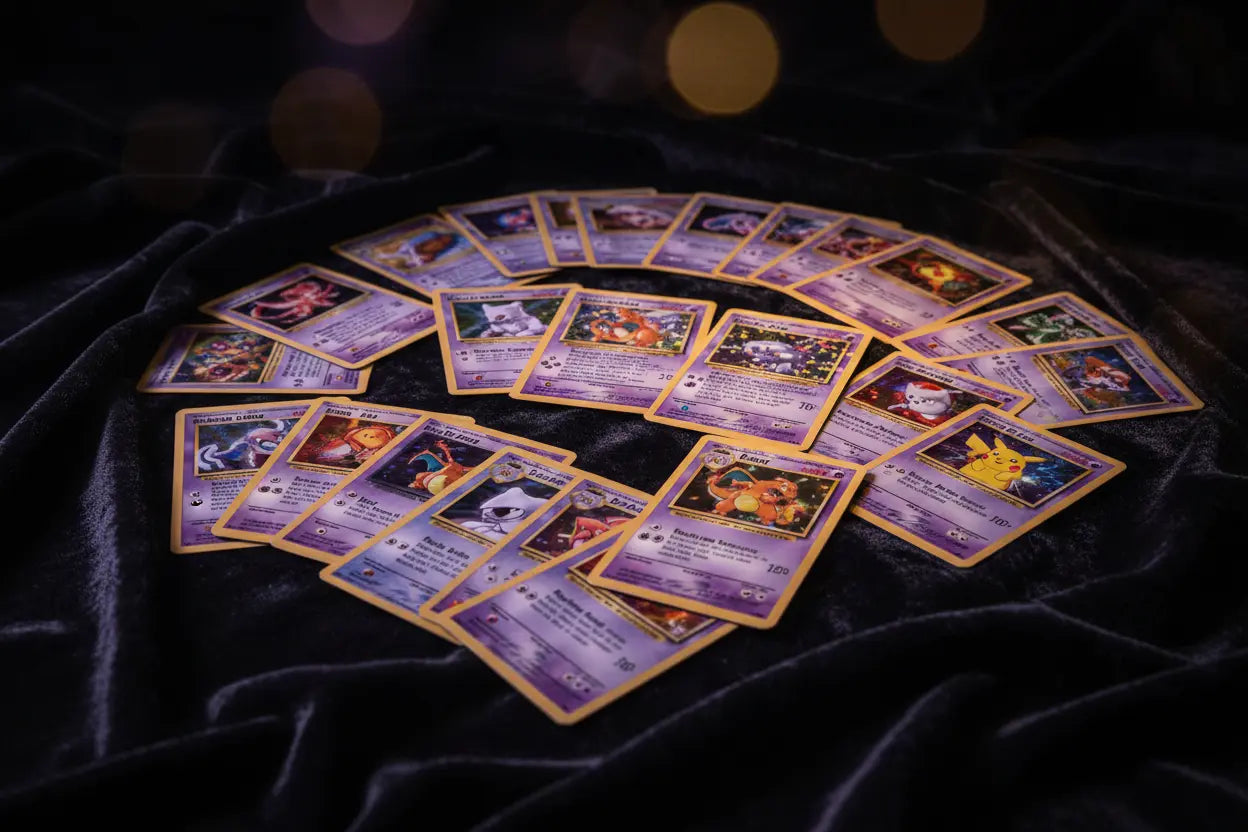
The Pokémon Base Set represents the iconic starting point for the Pokémon card game and collection. Since its release in the late 1990s, it has captivated both players and collectors with its iconic cards. In this article, you will discover a complete list of Base Set cards, their descriptions, as well as the historical importance of this major set in 2026. Whether you are a long-time fan or a new collector, this detailed guide will help you better understand and appreciate the richness of the Pokémon Base Set.
What is the Pokémon Base Set and why is it important?
The Pokémon Base Set is the very first official collection of Pokémon cards launched in 1999. It laid the foundations for the Pokémon Trading Card Game (TCG) and introduced the first Pokémon, attacks, and energies in a format that quickly captivated a global audience. This collection is of paramount importance because it gave rise to the competitive gaming universe with now legendary cards that have become centerpieces for collectors. Even today, in 2026, the Base Set continues to generate remarkable enthusiasm, blending nostalgia and passion for fans and trainers alike.
Structure and composition of the Pokémon Base Set
The original Base Set includes a total of 102 cards. These cards are divided into several categories: Pokémon, Trainer cards, and Energy cards. More precisely, 60 cards feature Pokémon, 34 are Trainer cards, and 8 represent essential energies. Compared to subsequent sets that complicated mechanics with more cards and options, the Base Set remains simple and accessible. There are several editions, including the precious 1st Edition, a limited edition, and several reprints that allow the collection to be adapted to various budgets and interests.
The different categories of Pokémon Base Set cards
Base Set cards are divided into four main categories: Common, Uncommon, Rare, and Holographic. Common cards have a circular symbol and a simple design, while Uncommon cards have a diamond. Rare cards display a star symbol and often feature more powerful Pokémon. Finally, holographic cards, such as the very famous Tygnon or Pikachu, have a reflective surface that makes them particularly attractive. These distinctions are not just aesthetic: they largely influence rarity and value, with some holographics becoming highly sought-after collector's items.
Exhaustive list of Pokémon Base Set cards
Pokémon Cards - from #1 to #48
Here is the detailed list of the 48 Pokémon cards from the Base Set with their number, type, and a brief description:
| Number | Name | Type | Description |
|---|---|---|---|
| 1 | Alakazam | Psychic | Powerful Psychic Pokémon, often used for its speed and strategic attacks. |
| 2 | Ivysaur | Grass/Poison | Bulbasaur's evolution, very popular for its dual type and combat strength. |
| 3 | Venusaur | Grass/Poison | Evolved version and powerful tank of the Base Set, a prized and strategic card. |
| 4 | Charizard | Fire/Flying | Iconic holographic card, highly sought after for its design and power. |
| 5 | Clefable | Fairy | Rare and appreciated for its in-game support abilities. |
| 6 | Squirtle | Water | Famous starter Pokémon, often collected for its nostalgia. |
| 7 | Hitmonchan | Fighting | Rare card with a collector's holographic version. |
| 8 | Machoke | Fighting | Machop's evolution, used for its powerful physical attacks. |
| 9 | Magnemite | Electric/Steel | Uncommon card, known for its unusual dual type. |
| 10 | Mewtwo | Psychic | One of the most powerful and famous cards in the Base Set. |
| 11 | Nidoking | Poison/Ground | Holographic card, appreciated for its high stats. |
| 12 | Raichu | Electric | Pikachu's evolution, very popular with several collector's versions. |
| 13 | Poliwrath | Water/Fighting | Also called "Grenousse" in the French version, powerful in competition. |
| 14 | Pikachu | Electric | Iconic emblematic card, a true symbol of the Pokémon franchise. |
| 15 | Chansey | Normal | Valuable for its high HP and defensive capabilities. |
| 16 | Pidgey | Normal/Flying | Common in the set, often the first flying Pokémon encountered. |
| 17 | Pidgeotto | Normal/Flying | Pidgey's evolution, powerful for its aerial attacks. |
| 18 | Growlithe | Fire | Rare for its powerful attacks and role in aggressive decks. |
| 19 | Rattata | Normal | Common card, often used at the beginning of the game. |
| 20 | Raticate | Normal | Rattata's evolution, more strategic with its varied attacks. |
| 21 | Sandshrew | Ground | Frequent common card, known for its speed. |
| 22 | Sandslash | Ground | Sandshrew's evolution, with better endurance. |
| 23 | Zubat | Poison/Flying | Rare for its dual type and flying abilities. |
| 24 | Golbat | Poison/Flying | Evolution, with increased strategic impact. |
| 25 | Pikachu | Electric | Another Pikachu often sought after for collection. |
| 26 | Raichu | Electric | Powerful electric Pokémon of the set, sometimes holographic. |
| 27 | Sandshrew | Ground | Efficient for its defense and attack speed. |
| 28 | Growlithe | Fire | Famous for its potential in fire decks. |
| 29 | Haunter | Ghost/Poison | Rare and often used because its abilities can surprise. |
| 30 | Gastly | Ghost/Poison | Haunter's pre-evolution, appreciated for its fighting style. |
| 31 | Jynx | Ice/Psychic | Strategic card for its combined attacks. |
| 32 | Nidoran F | Poison | Among the popular basic cards. |
| 33 | Nidorina | Poison | More powerful evolution, often in defensive decks. |
| 34 | Nidoqueen | Poison/Ground | One of the rare holographic cards in the set. |
| 35 | Magikarp | Water | Famous for its weakness but high nostalgic value. |
| 36 | Gyarados | Water/Flying | Very expensive holographic card and prized by collectors. |
| 37 | Nidorino | Poison | Common in fast attack decks. |
| 38 | Poliwhirl | Water | Rare in the set, with an appreciated design. |
| 39 | Poliwrath | Water/Fighting | Powerful evolution, often used in competition. |
| 40 | Raticate | Normal | Common card, base of many beginner decks. |
| 41 | Pidgey | Normal/Flying | Classic card with good speed. |
| 42 | Wartortle | Water | Squirtle's evolution, very popular for its powerful attacks. |
| 43 | Goldeen | Water | Initial rare, pre-evolution of Seaking. |
| 44 | Seaking | Water | Powerful card in the game, rare and sought after. |
| 45 | Caterpie | Bug | Simple common card, often present in starter decks. |
| 46 | Charmander | Fire | First generation icon, highly sought after in both holo and 1st edition versions. |
| 47 | Diglett | Ground | Common card, useful for defense in the early game. |
| 48 | Doduo | Normal/Flying | Common and appreciated for its speed and dual type. |
Trainer Cards and Energy Cards - from #49 to #102
The Base Set includes 34 Trainer and Energy cards, essential for improving gameplay. Among the essential Trainer cards are Potion, Mister Fuji, and Bill, which allow you to heal, retrieve Pokémon from your hand, or draw additional cards, respectively. They perfectly balance the Base Set and add strategy and depth to the game. Energy cards cover all necessary types: Fire, Water, Grass, Electric, Psychic, Fighting, etc. For example, the Electric Energy card is essential for decks based on Pikachu or Raichu. The Psychic Energy card is highly prized in Alakazam and Mewtwo decks. These Energy cards are graphically simple, but their role is key to powering the attacks of Pokémon on the field.
Historical context and impact of the Base Set on collecting
Launched in the late 1990s, the Pokémon Base Set was an immediate success, laying the groundwork for the TCG. The rapid release of the 1st Edition set made it a prized collection due to its limited nature, with rarity increasing over the years. Today, these cards are cultural and economic investments, with perfectly preserved versions reaching significant sums. This set remains a cornerstone in the evolution of Pokémon cards, marking the beginning of a still-flourishing and continually reissued franchise.
How to identify and purchase authentic Pokémon Base Set cards?
To ensure you are purchasing authentic Pokémon Base Set cards, you need to observe several key visual elements, such as the set symbol in the bottom right of the card, the white or black border, and the holographic reflections for holo cards. Using reliable platforms such as specialized stores, eBay, or Amazon helps avoid counterfeits. Furthermore, checking the card's condition through grading (PSA, Beckett) is essential to assess its true value, especially for rare or 1st Edition cards.
The rarest and most sought-after cards in the Pokémon Base Set
Among the rarest and most prized cards are the Charizard holo 1st Edition, Alakazam holo, and Machoke holo. Their exceptional value is explained by their limited print run, their often preserved condition, and their lasting cultural popularity. For beginner collectors, it is advisable to target these iconic cards in good condition and to monitor auctions and specialized sales.
Tips for maintaining and preserving Base Set cards
To preserve your Base Set cards, protect them from direct light, humidity, and excessive handling. Use plastic sleeves or specific cases, adapted to the standard size of Pokémon cards. Maintaining excellent initial condition will greatly increase their long-term value.
Events and online sales dedicated to Pokémon Base Set cards
Enthusiasts can participate in live events, specialized fairs, or auctions focusing on collectible cards such as the Base Set. For purchases and resales, prioritize recognized platforms and follow market trends to avoid missing the best opportunities.





Leave a comment
This site is protected by hCaptcha and the hCaptcha Privacy Policy and Terms of Service apply.